
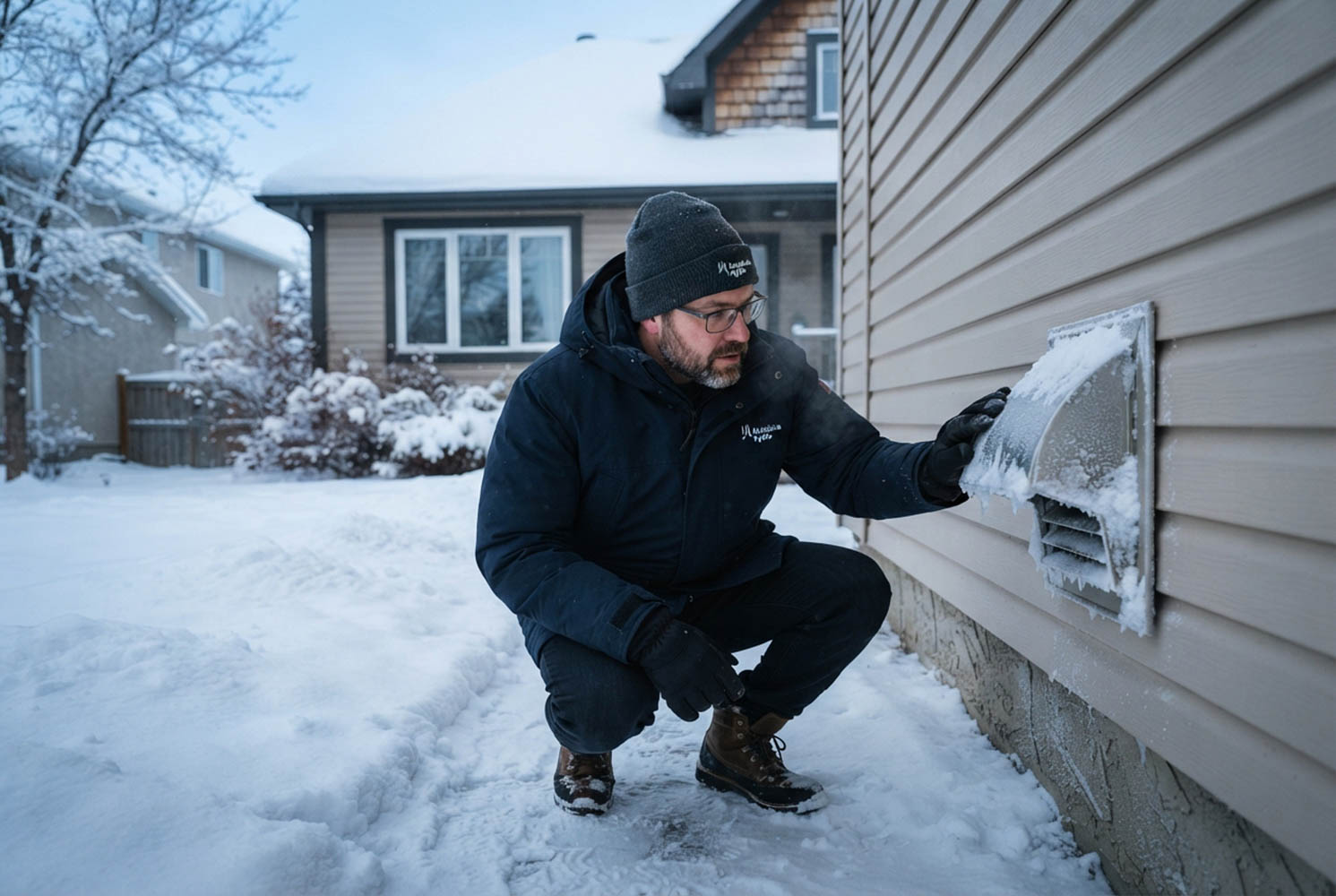
Winnipeg winters are known for extreme cold, heavy snowfall and freezing conditions, but many homeowners may not realize how these conditions can affect their home’s laundry exhaust system. Understanding dryer vent safety Winnipeg homeowners need to know about can help reduce the risk of airflow problems, overheating and potentially dangerous lint buildup during the coldest months of the year.
A clothes dryer produces significant amounts of warm, moist air every time it operates. That air needs a clear path to the outdoors. When the exhaust system becomes restricted by lint, ice, snow or other debris, heat and moisture can have difficulty escaping.
During a Winnipeg winter, an exterior exhaust opening can face additional challenges that are less common during warmer months. For homeowners, knowing the warning signs and understanding when professional assistance is needed can make an important difference in household safety.
Why Winnipeg’s Cold Climate Can Affect Dryer Exhaust Systems
Extreme winter temperatures can create conditions that interfere with normal airflow.
The exterior termination, where warm air exits the house, is exposed directly to Winnipeg’s weather. Snowdrifts, frost and ice can accumulate around the opening, particularly when it is located close to the ground or in an area prone to drifting snow.
Inside the ductwork, lint accumulation can gradually reduce the available space for air to travel. If the outside opening is also partially obstructed, the combination can significantly restrict airflow.
Homeowners should watch for:
- Snow or ice covering the outdoor exhaust opening.
- A flap that does not open normally while the appliance is operating.
- Lint collecting around the exterior outlet.
- Clothes taking much longer to dry than they previously did.
- The appliance or surrounding area becoming unusually hot.
- Moisture or excessive humidity around the laundry area.
- Unusual smells during or after a drying cycle.
These signs do not necessarily mean there is a serious fault with the appliance itself. Sometimes the problem is further along the exhaust pathway.
Keep Your Winnipeg Home Safer This Winter
Winnipeg’s winter conditions can be particularly hard on residential exhaust systems. Months of freezing temperatures, heavy snowfall and repeated snow accumulation can create problems at the point where warm air leaves the home.
The location and design of the exhaust outlet can make a difference. In some Winnipeg homes, the termination may be close to ground level, tucked beneath a deck, or positioned along a wall where drifting snow can accumulate. Multi-level homes and properties with longer duct runs may also have more concealed areas where restrictions are difficult to identify.
Older homes deserve particular attention. Over the years, an exhaust system may have been modified, extended or repaired, potentially creating additional bends, connections or sections that are difficult to access.
For Winnipeg homeowners, professional assessment can be especially valuable when:
- The laundry area is located far from an exterior wall.
- The exhaust route passes through an attic, ceiling or wall cavity.
- The exterior termination is exposed to significant snow accumulation.
- The property has experienced recurring airflow problems.
- The age or configuration of the exhaust system is uncertain.
These conditions do not automatically mean there is a safety problem, but they can make it harder for homeowners to determine whether the exhaust pathway is functioning properly.
A professional technician can assess the configuration, identify potential restrictions and determine whether the system requires maintenance or further attention. For Winnipeg homes exposed to months of severe winter weather, understanding how the exhaust system is configured can be just as important as keeping it clean.
How a Dryer Vent Blockage Can Become a Safety Concern
A dryer vent blockage can develop gradually. Lint is produced during normal laundry use, and although the lint screen captures a significant portion, fine particles can still travel into the exhaust duct.
As material accumulates, airflow may become increasingly restricted.
The appliance may then need to operate for longer periods to remove moisture from clothing. That means more heat is generated over a longer operating cycle, while the restricted pathway makes it harder for that heat and moisture to leave the home.
This is why homeowners should not treat noticeably longer drying times as merely an inconvenience.
A change in drying performance can be an early warning that the exhaust system needs attention.
Dryer Vent Fire Safety Starts With Prevention
When discussing dryer vent fire safety, one of the most important points is that regular lint-screen maintenance is only part of the picture.
The screen should be cleaned after every load. However, lint can also accumulate in the exhaust duct and around the exterior termination. If that material remains in place while the appliance operates at high temperatures, it can become a significant safety concern.
Canadian government guidance recommends keeping dryer lint traps and exhaust piping clean because accumulated lint can create a fire hazard.
Homeowners can reduce unnecessary risk by making these habits part of their regular routine:
- Clean the lint screen after every load.
- Keep the area around the appliance free from clutter.
- Check the exterior exhaust opening periodically.
- Never ignore unusual overheating or burning smells.
- Pay attention to sudden changes in drying performance.
- Arrange professional maintenance when airflow appears restricted.
These simple steps do not replace professional assessment, but they can help homeowners recognize problems sooner.
Why Winter Makes Exterior Checks Especially Important
During summer, the outdoor termination may be easy to overlook. In winter, however, it deserves more attention.
Warm air leaving the home encounters freezing outdoor temperatures. Snow and ice can accumulate around the opening, potentially limiting the amount of air that can escape.
After significant snowfall, homeowners should visually check whether the exhaust outlet remains unobstructed. This is particularly important when the termination is located near ground level or beneath an area where snow tends to drift.
Never use sharp tools to aggressively break away ice around the opening. Doing so could damage the hood, duct connection or surrounding exterior materials.
If the opening repeatedly freezes or becomes obstructed, the underlying installation and airflow should be evaluated by a qualified professional.
When a Dryer Vent Inspection Is Worthwhile
A dryer vent inspection is especially useful when homeowners notice warning signs but cannot determine where the problem is coming from.
A professional technician can evaluate the accessible portions of the exhaust route and look for conditions that may be affecting airflow.
Depending on the property, an inspection may identify:
- Heavy lint accumulation.
- A crushed or disconnected duct.
- Excessive bends or an unnecessarily long exhaust route.
- A damaged exterior termination.
- Snow, ice or debris restricting the outlet.
- Foreign objects or nesting material.
- Poor airflow caused by an underlying installation issue.
This is important because removing lint alone may not solve a recurring airflow problem.
For example, if part of the duct has collapsed behind a wall or the exterior termination is poorly positioned, the restriction may return even after the accumulated material has been removed.
Why Professional Maintenance Is Safer Than Guesswork
Some homeowners attempt to reach into the exhaust duct using household vacuum cleaners, brushes or improvised tools. While basic homeowner maintenance has its place, concealed or complicated exhaust systems can be difficult to assess without the appropriate equipment and experience.
Professional technicians can examine the system more comprehensively and determine whether the problem is limited to buildup or whether another issue needs attention.
Professional maintenance can be particularly valuable when:
- The exhaust route is long or difficult to access.
- The laundry area is located far from an exterior wall.
- Drying times have increased significantly.
- The outside flap has weak or inconsistent airflow.
- The home has experienced recurring blockage problems.
- The exhaust duct has not been professionally assessed for an extended period.
For homeowners arranging dryer vent cleaning Winnipeg services, the goal should not simply be to remove visible lint. A reputable provider should also consider airflow, the condition of the exhaust route and potential causes of recurring restrictions.
Winnipeg Homes Are Not the Only Ones Affected
Cold-weather exhaust problems are particularly relevant in Winnipeg, but homeowners throughout Canada should pay attention to seasonal conditions.
Our team provides professional services in Toronto, Winnipeg, Mississauga, Edmonton, Brampton and Calgary. Each city has its own combination of weather conditions, home designs and exhaust configurations.
Winnipeg and Edmonton can experience prolonged periods of extreme cold. Calgary’s rapidly changing winter conditions can create repeated freeze-and-thaw cycles. Toronto, Mississauga and Brampton experience their own combination of snow, freezing temperatures and moisture.
Regardless of location, the basic safety principle remains the same: warm, moist air needs a clear and properly functioning route to the outdoors.
Don’t Wait for a Serious Warning Sign
A laundry appliance that suddenly takes twice as long to dry clothing should not simply be put through another cycle.
Longer drying times, excessive heat and weak exterior airflow can indicate that something is restricting the exhaust pathway. Addressing these signs early can help homeowners avoid allowing a relatively small maintenance issue to develop into a more serious safety concern.
If you are unsure about the condition of your system, professional assessment is the safest approach. A technician can determine whether the issue involves lint accumulation, an exterior obstruction, damaged ductwork or another airflow problem.
Ready to Get Your Dryer Vent Winter-Ready?
If you’re concerned about winter airflow, lint buildup or unusual drying performance, our professional team is here to help homeowners across Winnipeg, Toronto, Mississauga, Edmonton, Brampton and Calgary keep their exhaust systems clear and operating safely.
Book online now to schedule your professional service appointment.


