
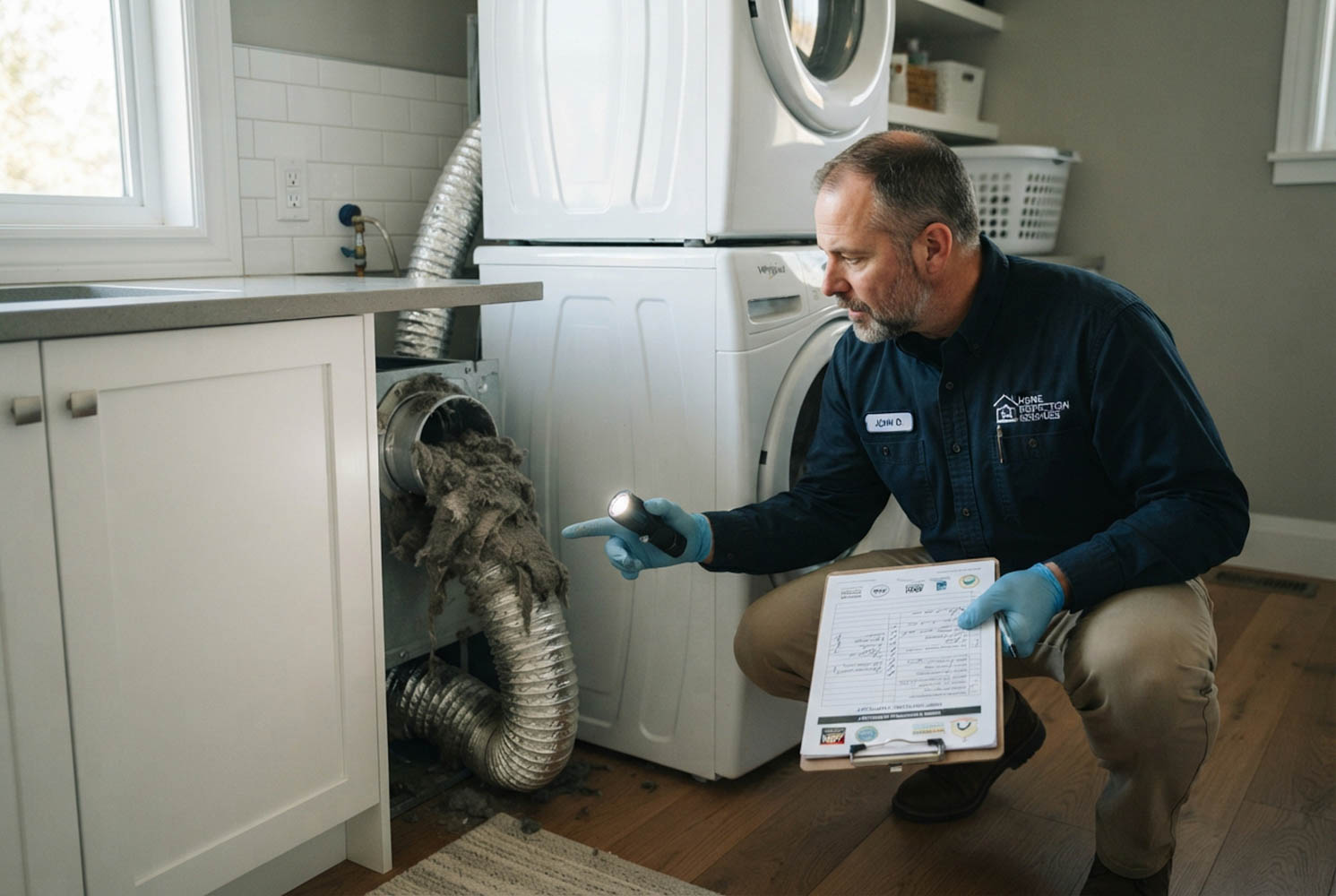
When preparing to sell your home, even small maintenance issues can signal bigger concerns to a home inspector. A clogged dryer vent is one of those overlooked problems that can raise immediate red flags. Beyond slowing down laundry, it suggests fire hazards, poor airflow, and even potential moisture or mold buildup—all issues that inspectors take seriously. More importantly, these findings can directly affect your home’s market value. Real estate professionals note that flagged maintenance problems often lead to repair credits or reduced offers, sometimes costing sellers anywhere from $500 to $1,500 depending on the severity of the issue. In competitive Canadian markets, even minor red flags can shift buyer confidence and negotiation outcomes.
Why Inspectors Flag a Clogged Dryer Vent
During a home inspection, professionals follow a systematic process designed to uncover risks that may affect safety, efficiency, and property value. A clogged dryer vent often stands out because inspectors use both observation and testing to reveal hidden problems. Here’s how the process brings these red flags to light:
Fire Hazard Concerns
Inspectors are trained to spot fire risks quickly, and lint buildup inside dryer vents is one of the most common culprits. They don’t just glance at the appliance—they actively check behind the dryer and along the vent line for visible lint accumulation.
- Visual inspection: Heavy lint deposits are a clear warning sign.
- Heat checks: Excessive heat around the dryer during operation signals restricted airflow.
- Documentation: Any evidence of lint buildup is recorded as a fire hazard, often prompting recommendations for immediate dryer vent inspection.
Poor Airflow and Appliance Strain
Efficiency matters during a home inspection. When airflow is blocked, dryers run longer and harder, which inspectors interpret as both an energy issue and a maintenance concern.
- Operational testing: Inspectors often run the dryer briefly to observe cycle length and airflow strength at the exterior vent.
- Indicators: Weak airflow or extended drying times suggest restricted exhaust.
- Report impact: These findings are flagged as inefficiency, raising concerns about higher utility costs and premature appliance wear.
Moisture and Mold Potential
Moisture damage is another red flag inspectors look for, and clogged vents are a common source. Trapped humidity doesn’t just stay in the duct—it can seep into walls, ceilings, or flooring.
- Moisture detection: Inspectors check for condensation around ductwork, damp walls, or peeling paint near the laundry area.
- Odor checks: Musty smells are a strong indicator of trapped humidity.
- Health note: Mold growth is documented as a serious issue, often requiring remediation before closing.
Indoor Air Quality Issues
Air quality is a growing concern for buyers, and inspectors know that clogged vents can compromise it. Dust and lint particles recirculating into the home are not only unpleasant but also unhealthy.
- Airflow observation: Inspectors may notice lint particles or dust recirculating into the laundry room.
- Vent cover check: A clogged or blocked exterior vent can force particles back indoors.
- Inspection note: Poor indoor air quality is flagged as a maintenance lapse that could affect buyer confidence.
Impact on Home Value
For most sellers, the home inspection isn’t just about safety—it’s about protecting the property’s market value. A clogged dryer vent may seem like a small maintenance issue, but inspectors often interpret it as a sign of broader neglect. That perception can ripple through the entire sales process.
- Overall impression: When inspectors see lint buildup or restricted airflow, they note it as a lack of routine care. Buyers may then wonder what other areas of the home have been overlooked.
- Buyer leverage: Even minor red flags give buyers negotiating power. A clogged vent can lead to requests for repair credits, reduced offers, or conditions that delay closing.
- Inspection outcome: Because inspection reports carry weight in real estate transactions, a flagged dryer vent can shift buyer confidence. What could have been a simple cleaning job suddenly becomes a bargaining chip that affects the final sale price.
Industry estimates suggest sellers may lose $500–$1,500 in concessions for vent cleaning or duct replacement, and costs can climb higher if mold remediation or appliance replacement is required. In markets like Toronto, Winnipeg, Mississauga, Edmonton, Brampton, and Calgary, where buyers are cautious and inspections are thorough, these small details can make the difference between a smooth sale and a stalled negotiation.
How Homeowners Can Stay Ahead of Red Flags
To avoid inspection setbacks, homeowners can mirror the same checks inspectors perform. In Canadian cities where cold winters and longer duct runs make vent issues more common, these steps are especially important:
1. Schedule Regular Dryer Vent Inspection
Book a dryer vent inspection annually to catch lint buildup before it becomes a hazard. Documented maintenance reassures buyers and prevents fire risks from being flagged.
2. Watch for Early Warning Signs
Run the dryer and check airflow at the exterior vent. Look for signs of dryer vent problems such as clothes taking longer to dry, burning smells during cycles, or excess lint around the dryer. Addressing these signs early prevents escalation into inspection red flags.
3. Invest in Professional Dryer Vent Services
DIY cleaning often misses hidden blockages deep in the ductwork. Professional dryer vent services ensure thorough cleaning and proper airflow. Inspectors recognize the difference between surface cleaning and professional maintenance.
4. Prevent Dryer Vent Issues with Routine Care
Check the exterior vent cover regularly for obstructions like leaves or snow. Avoid using plastic or foil ducts, which trap lint more easily, and keep the laundry area clutter‑free to reduce fire risks. These preventive steps show inspectors the home is well cared for.
5. Document Maintenance for Buyers
Keep receipts or service records from vent cleanings. Providing proof of maintenance builds trust with buyers and demonstrates proactive care, which inspectors often note positively in their reports.
Remember, a clogged dryer vent isn’t just a safety hazard—it can directly reduce your home’s value during inspection. From repair credits of a few hundred dollars to potential remediation costs in the thousands, the financial impact is real. For Canadian homeowners in Toronto, Winnipeg, Mississauga, Edmonton, Brampton, and Calgary, proactive maintenance is essential. A routine dryer vent cleaning eliminates this before listing, protecting both safety and property value.
Ready to Protect Your Home Value?
Don’t let a simple maintenance issue cost you thousands at closing. Schedule your dryer vent service call today and ensure your home is inspection‑ready before hitting the market.


