
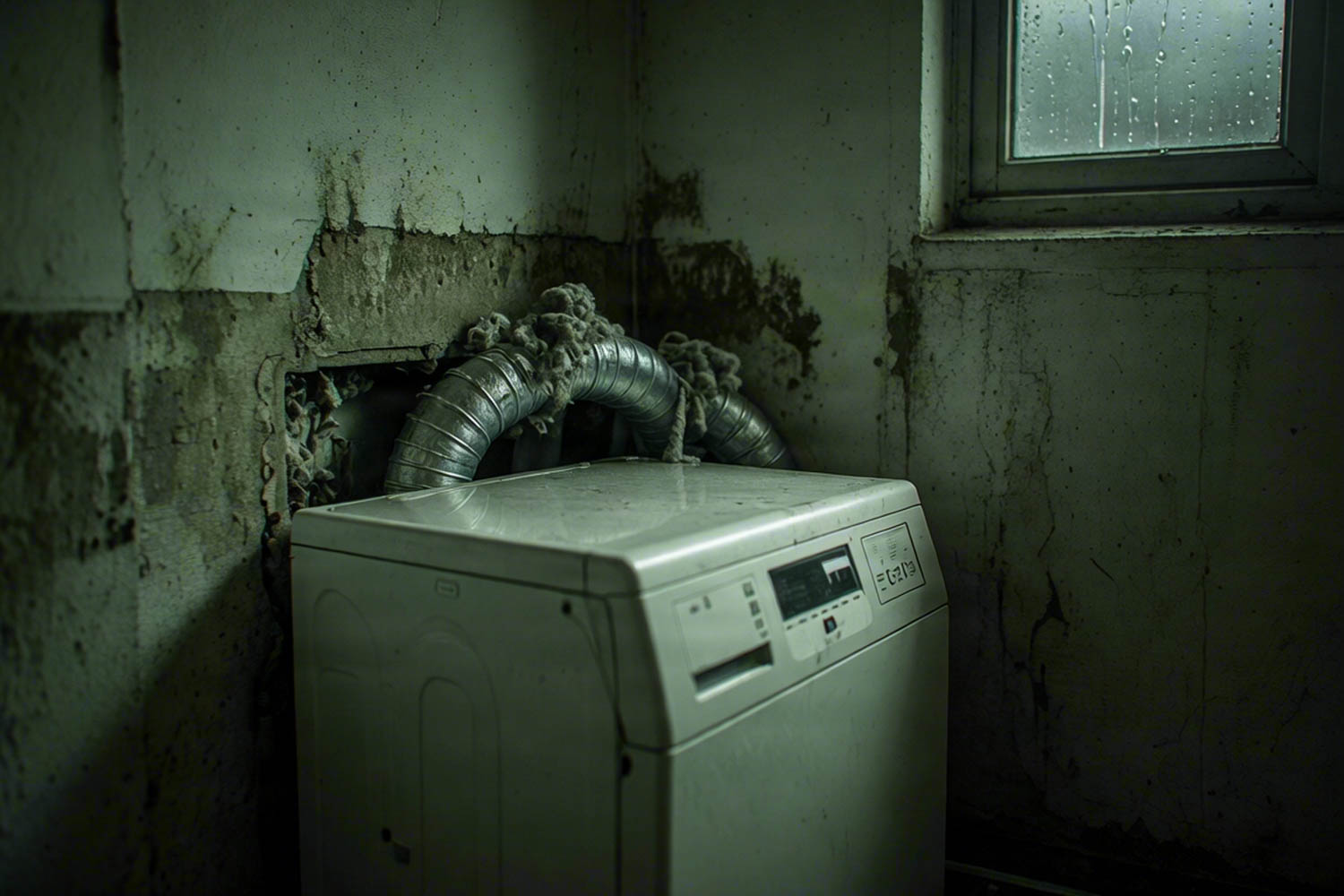
If you’ve ever caught a musty smell drifting out of your laundry room, or noticed a faint ring of discoloration creeping along the wall behind your dryer, you’re not imagining things — and you’re definitely not alone. As a local dryer vent service, this is one of the most common calls we get from homeowners across Toronto, Winnipeg, Mississauga, Edmonton, Brampton, and Calgary.
Here’s the honest truth: mold in laundry room spaces isn’t just bad luck. It’s usually a sign that moisture has somewhere to hide — and more often than not, your dryer vent is part of the story.
Why Your Laundry Room Is the Perfect Mould Breeding Ground
Laundry rooms check almost every box mould needs to thrive:
- Warmth from the dryer and washer running cycles
- Moisture from wet laundry, hoses, and steam
- Poor airflow, especially in basements or closet-style laundry setups
- Limited natural light, which mould loves
On their own, any one of these might not cause a problem. But combine them, and you’ve created a small, enclosed environment that’s practically an invitation for dryer vent mold and mould to take hold — whichever way you spell it, the damage is the same.
How Your Dryer Vent Fits Into the Problem
This is the part most homeowners don’t expect: a healthy dryer vent should be sending all that hot, moist air outside your home, not trapping it inside your walls or laundry room.
When your vent is clogged with lint, crushed, disconnected, or simply too long and winding, that moisture-heavy air has nowhere to go. Instead of escaping outdoors, it backs up into your laundry room, seeps into nearby drywall, and settles into corners where air rarely circulates.
We often see a few tell-tale signs when we’re called out for a signs of mold in dryer vent inspection:
- A persistent musty or damp smell near the dryer
- Visible dark spots on the wall, floor, or ceiling behind the appliance
- Excess lint buildup at the vent opening outside
- Longer-than-normal drying times (a classic sign of poor airflow)
- Condensation on windows or nearby pipes after doing laundry
If any of that sounds familiar, your vent isn’t just inefficient — it may be actively feeding a mould problem you can’t fully see yet.
Why This Deserves Your Attention (Not Just Your Annoyance)
We get it — a bit of mustiness can feel like a minor inconvenience compared to everything else on your to-do list. It’s easy to crack a window, light a candle, and move on with your day. But laundry room mildew smell issues rarely stay small, and here’s why acting sooner rather than later actually matters.
Mould doesn’t stay contained. Once it takes hold behind a wall or under flooring, it spreads quietly. By the time you can see it or smell it clearly, it’s often already established itself in places you can’t easily reach — insulation, subflooring, or the drywall cavity behind your dryer. What starts as a small patch can turn into a much larger remediation project within a matter of months, especially in humid seasons.
Your health — and your family’s — is on the line. Mould exposure isn’t just unpleasant; it can genuinely affect how you feel day to day. Common reactions include:
- Persistent coughing, sneezing, or throat irritation
- Worsened allergy or asthma symptoms
- Headaches or fatigue that seem to have no clear cause
- Skin irritation in more sensitive individuals
Kids, seniors, and anyone with a compromised immune system or respiratory condition tend to feel these effects the most — and often the fastest.
Blocked vents are a fire risk, not just a mould risk. This is the part that surprises a lot of homeowners: the same clogged, poorly ventilated system that’s feeding vent moisture buildup and mould growth is also a leading cause of house fires in Canadian homes. Lint is highly flammable, and when it accumulates in a vent that’s already struggling to move air, you’re combining heat, restricted airflow, and combustible material in one space. It’s a risk that’s completely preventable with regular maintenance — but only if it’s addressed.
Small problems get expensive fast. A vent inspection and service call is a modest, predictable cost. Mould remediation, drywall replacement, flooring repair, and potential health-related expenses are not. Homeowners who catch these issues early typically spend a fraction of what it costs to fix things once mould has spread or a vent issue has caused more serious damage.
Your home’s resale value can take a hit. If you ever plan to sell, visible mould or a documented history of moisture issues can raise red flags during a home inspection — leading to lower offers, buyer hesitation, or unexpected negotiations you didn’t see coming.
None of this is meant to alarm you — it’s meant to explain why we take it seriously every time we get a call. A little attention now, in the form of one inspection, can save you from a much bigger, costlier, and more stressful situation later.
What You Can Do Starting Today
The good news? Most laundry room mould problems are preventable with a few consistent habits:
- Clean the lint trap before every single load — no exceptions
- Check your outdoor vent flap to make sure it opens freely and isn’t blocked by snow, debris, or nesting animals
- Run a dehumidifier in your laundry space if it tends to feel damp
- Leave the laundry room door open after cycles to encourage airflow
- Book a professional inspection at least once a year, especially if your dryer takes longer to dry clothes than it used to
That last point matters more than people realize. A big part of how to prevent mold in laundry room spaces comes down to what’s happening inside your vent system — the part you can’t see or clean yourself with a vacuum and some elbow grease.
Why a Professional Inspection Makes All the Difference
We know it’s tempting to assume “it’s probably fine” until there’s an obvious problem. But dryer vents run through walls, ceilings, and sometimes long stretches of ductwork — areas that are impossible to properly assess on your own.
When our technicians inspect a vent system, we’re looking for:
- Lint accumulation along the full length of the duct
- Crushed, disconnected, or improperly sized sections
- Moisture trapped in low points of the vent run
- Proper airflow and exterior venting
Catching these issues early is a lot less stressful — and less expensive — than dealing with drywall repairs, mould remediation, or worse, a house fire.
We’re Here to Help, Wherever You Are
Whether you’re in a downtown Toronto condo, a Winnipeg bungalow, a Mississauga townhouse, an Edmonton family home, or you’re calling from Brampton or Calgary, our team understands how Canadian weather and home construction styles contribute to these issues — and we know how to fix them properly.
If you’ve noticed any musty smells, longer drying times, or visible marks near your laundry area, don’t wait for it to get worse. A quick inspection today can save you from a much bigger headache tomorrow.
Ready to breathe easier in your laundry room? Book your dryer vent inspection today, and let’s make sure moisture — and mould — have nowhere left to hide.


