
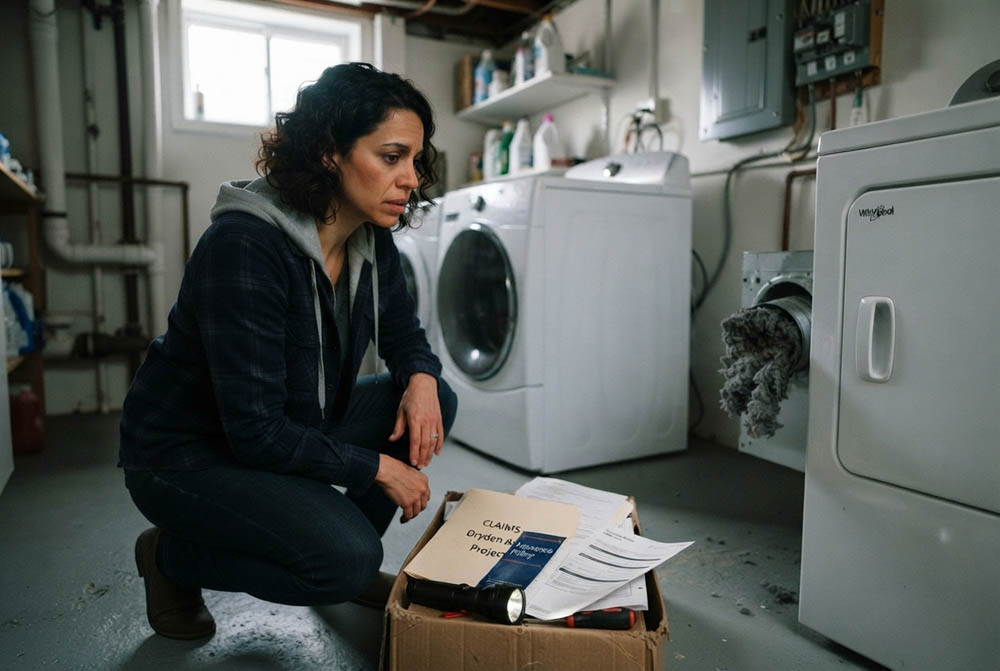
Few household appliances cause as much unexpected damage as a clothes dryer left unmaintained. Lint buildup alone is responsible for more than 15,000 incidents like this across the country every year, and cities like Toronto report dozens of related emergency calls annually. If your home is ever damaged this way, the first question most people ask is simple: will my home insurance cover it?
The short answer is usually yes — but there’s an important catch. Insurers can deny or reduce a dryer fire insurance claim if they find evidence of poor upkeep, like ductwork that hasn’t been cleaned in years. Here’s what you need to know about dryer fire home insurance in Canada, and how regular maintenance protects both your home and your coverage.
How Common Is This Problem in Canada?
Lint buildup in exhaust ducts is consistently identified as the leading cause of these incidents nationwide. Emergency responders across the country continue to answer preventable calls every year, with cities like Toronto averaging close to 40 related incidents annually. Larger cities with older housing stock — long duct runs, shared laundry rooms in high-rises, aging infrastructure — tend to see higher rates, but the risk exists in any home with this type of appliance.
Winter months add extra risk. Canadians run their machines more often during colder seasons, and outdoor exhaust flaps can become blocked by snow, ice, or debris, restricting airflow and increasing heat buildup inside the system.
Does Home Insurance Cover Dryer Fire Damage?
What Standard Home Insurance Typically Covers
Fire is one of the core perils covered by virtually every home insurance policy in Canada, whether you have a named-perils or all-risk policy. If an incident like this damages your home, your policy will typically cover:
- Structural repair costs
- Damaged personal belongings and contents
- Smoke and soot damage, even in rooms away from the source
- Additional living expenses (ALE) if you’re temporarily displaced
This coverage generally applies even if the incident started inside the appliance and spread through the exhaust duct into your walls or attic — a common pattern, since the ductwork can act like a chimney and carry flames well beyond the laundry room.
When Insurers May Deny or Reduce a Claim
Coverage isn’t guaranteed in every scenario. Insurers can dispute or deny a dryer fire insurance claim if they determine the cause was negligence rather than an unavoidable equipment failure. Common reasons for denial include:
- Lack of maintenance — ductwork that was clearly never cleaned
- Improper installation — flexible plastic ducting instead of rigid metal, crushed or kinked runs
- Ignoring warning signs — continuing to use a machine that took unusually long to finish a cycle or ran hot
- Blocked outdoor exhaust hoods — flapper covers that don’t open properly, restricting airflow
Coverage details vary by insurer and by province, so it’s always worth reviewing your specific policy wording or asking your broker directly how negligence clauses apply to your coverage.
What Causes These Incidents?
Understanding the root causes helps explain why insurers scrutinize maintenance history so closely:
- Lint buildup inside the exhaust system, restricting airflow and trapping heat
- Long or crushed duct runs, common in finished basements or homes where the appliance sits far from an exterior wall
- Blocked outdoor flaps, from lint, snow, or even bird and rodent nests
- Overdue professional cleaning — most manufacturers recommend servicing the exhaust system annually, more often for larger households
- Improper materials, such as foil or plastic ducting instead of rigid or semi-rigid metal
How to Reduce the Risk — and Protect Your Insurance Claim
Most of these incidents come down to preventable maintenance gaps rather than sudden mechanical failure, which means a few consistent habits can meaningfully lower your risk. These steps also matter beyond safety: if you ever do need to file a claim, being able to show a history of regular upkeep can make a real difference in how your insurer evaluates it.
- Clean the lint trap after every load. It takes seconds and is your first line of defense.
- Schedule professional exhaust system cleaning annually — or every six months for larger households or heavy appliance use.
- Keep records of servicing and maintenance. If you ever need to file a claim, documentation showing regular upkeep can support your case with the insurer.
- Inspect the outdoor exhaust cover periodically to make sure it opens freely and isn’t blocked.
- Watch for warning signs, including longer-than-normal cycle times, an appliance that feels hot to the touch on the outside, or a burning smell during operation.
What to Do If You Experience This Kind of Damage
- Prioritize safety — evacuate immediately and call emergency services.
- Document the damage with photos and video once it’s safe to do so, before cleanup begins.
- Contact your insurance provider as soon as possible to start your claim.
- Arrange a professional inspection of the appliance and exhaust system for the claims process.
- Keep every receipt related to cleanup, repairs, and temporary living expenses.
Acting quickly and keeping thorough records in the hours and days after an incident can make the claims process considerably smoother. Insurers rely heavily on documentation to determine what happened and why, so the more evidence you can provide of both the damage and your prior maintenance habits, the stronger your position will be.
Prevention and Maintenance Across Canada
Homeowners in Toronto, Winnipeg, Mississauga, Edmonton, Brampton, and Calgary each face slightly different risk factors — from older homes with long, winding exhaust runs to extreme winter conditions that increase appliance use and the chance of blocked outdoor covers. Regardless of where you live, professional exhaust system cleaning is one of the simplest ways to reduce risk and support your home insurance coverage if the unexpected happens.
Key Questions to Consider
- Does home insurance cover dryer fire damage in Canada?
In most cases, yes. This type of damage is a standard covered peril under Canadian home insurance policies, but claims can be denied if it’s linked to poor maintenance. - Will my insurance be denied if my exhaust system was never cleaned?
It’s possible. Insurers may investigate the cause, and evidence of severely neglected ductwork can be used to deny or reduce a claim. - How often should I have my exhaust system cleaned?
Most experts recommend at least once a year, and every six months for larger households or frequent appliance use. - Does renters insurance cover this type of damage?
Renters insurance typically covers your personal belongings and liability, but coverage for the structure itself usually falls under the landlord’s policy. Check your specific policy for details. - Is regular exhaust cleaning required by law in Canada?
There’s no single national law, though local building codes and municipal regulations in some areas do address materials and maintenance standards.
Protect Your Home and Your Coverage
Home insurance typically covers dryer fire damage in Canada, but maintenance negligence remains the biggest threat to a successful claim. Regular exhaust system cleaning is a small investment that protects your home, your family, and your insurance coverage.
Book a professional inspection or cleaning today in Toronto, Winnipeg, Mississauga, Edmonton, Brampton, or Calgary — and reduce your risk before a small lint problem becomes a costly, avoidable one.


