
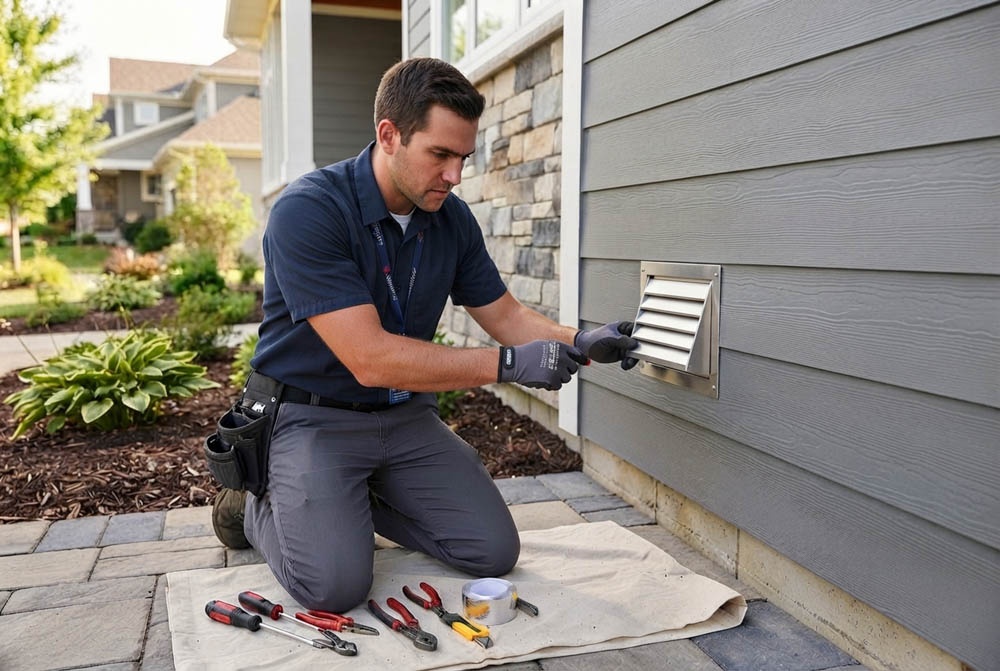
For dryer vent installation Toronto homeowners should know that getting the exhaust route wrong can lead to restricted airflow, longer drying cycles, moisture concerns and increased fire risk. At our local dryer vent company, we see many of the same installation problems in Toronto homes, from older detached houses to condos and basement laundry rooms. Fortunately, most of these issues can be prevented with the right materials, routing and professional installation.
If you’re installing a new appliance, renovating your laundry room or dealing with an older exhaust system, here are the top mistakes Toronto homeowners should avoid—and what you can do to fix them.
1. Using Plastic or Poor-Quality Ducting
One of the biggest mistakes is choosing inexpensive plastic or thin foil tubing for the permanent exhaust route. These materials can become crushed, kinked or sag over time, creating areas where lint can accumulate.
Toronto Fire Services recommends rigid or flexible metal ducting for exhausting to the outdoors and warns that plastic and metal foil products are more prone to kinking, sagging and crushing.
How to fix it:
- Replace unsuitable material with an appropriate metal duct.
- Keep the route as straight as reasonably possible.
- Secure connections properly.
- Follow the appliance manufacturer’s installation instructions.
A cheaper material may save money initially, but correcting a poorly installed system later can be considerably more disruptive.
2. Making the Exhaust Route Too Long
Toronto homes don’t all have the laundry area in the same location. A basement, second-floor laundry room or renovated space may require a longer route to reach an exterior wall.
The problem begins when the route becomes unnecessarily long or contains numerous bends. Every turn can increase resistance and make it harder for warm, moist air and lint to travel outside.
When planning a dryer exhaust duct, the objective should be a practical, direct route to the exterior.
The better approach is to:
- Plan the route before connecting the appliance.
- Minimize unnecessary bends.
- Avoid sharp turns where possible.
- Keep the route accessible for future inspection and maintenance.
Toronto Fire Services specifically advises homeowners to determine the straightest and most direct path outdoors to reduce lint accumulation in bends and elbows.
3. Crushing the Hose Behind the Appliance
This is particularly common when there is limited space between the laundry machine and the wall.
Pushing the appliance too far backward can compress the dryer vent hose, creating a restriction that may not be obvious from the front of the machine.
A homeowner may notice that clothes suddenly require longer cycles, but the real problem could be the connection hidden behind the appliance.
How to fix it:
Leave adequate clearance for the connection and make sure the transition section isn’t sharply folded. If the available space makes a proper connection impossible, the route may need to be modified rather than forcing the appliance against the wall.
4. Installing Too Many Elbows
A complicated route with multiple 90-degree turns may seem harmless, especially when working around plumbing, framing or other building components.
However, excessive bends can make airflow less efficient and provide additional surfaces where lint may collect.
This is one reason we recommend evaluating the entire route rather than simply looking at the short section visible behind the appliance.
A better installation uses the fewest practical turns while still respecting the structure of the home and the manufacturer’s requirements.
5. Exhausting Into an Attic, Garage or Enclosed Space
The exhaust should terminate outdoors—not inside an attic, garage, crawlspace or other enclosed area. Under Section 9.32.1.4 of the Ontario Building Code, exhaust ducts or vents connected to laundry-drying equipment are required to discharge directly outdoors.
The code also addresses requirements including independent exhaust routes, accessibility for cleaning and smooth, corrosion-resistant construction.
Redirecting warm, moisture-laden air into an enclosed area can create unnecessary moisture concerns and is not an appropriate substitute for a proper exterior termination.
If you’ve discovered an indoor termination:
- Stop treating it as a normal setup.
- Have the route inspected.
- Determine the most suitable exterior exit point.
- Correct the installation rather than simply extending the line into another enclosed area.
6. Choosing the Wrong Exterior Termination
The opening outside your home deserves just as much attention as the hidden section inside.
A damaged or obstructed dryer vent cover can interfere with airflow and may allow debris or pests to enter the exhaust route.
Toronto Fire Services recommends checking the air exhaust regularly and making sure the outdoor flap opens when the dryer is operating. If the flap remains closed or airflow appears weak, it may be a sign of an obstruction or restriction that needs attention.
During an inspection, look for:
- A flap that does not open properly.
- Visible lint around the outlet.
- Leaves, dirt or other debris.
- Damage to the exterior cover.
- Signs of birds or pests around the opening.
If the termination is damaged, replacement may be necessary instead of repeatedly cleaning around it.
7. Ignoring Toronto’s Older Homes and Renovations
Toronto has a wide mix of housing, including older detached properties, semis, townhomes, condos and renovated basement spaces. That variety means an exhaust route that worked for a previous appliance may not be suitable after a renovation or appliance replacement.
Moving a laundry machine a few feet can completely change the route.
This is particularly important when:
- A basement laundry room has been relocated.
- A laundry area has been added during a renovation.
- An older property still has its original exhaust arrangement.
- A new appliance has different connection requirements.
- The route passes through a difficult wall or ceiling area.
Don’t assume that an existing setup is correct simply because it has been there for years.
8. Assuming Cleaning Will Solve an Installation Problem
A common mistake we encounter is treating every airflow issue as a maintenance problem.
Lint accumulation can certainly restrict airflow, but cleaning cannot correct a crushed connection, excessive bends, unsuitable materials or an improperly designed route.
If clothes are taking noticeably longer to dry, don’t automatically assume the answer is another cleaning appointment.
A proper inspection should consider the complete system, including:
- The connection behind the appliance.
- The concealed route.
- The exterior termination.
- Airflow restrictions.
- Evidence of recurring lint buildup.
If the underlying installation is defective, dryer vent replacement or rerouting may be the more appropriate long-term solution.
9. Treating a DIY Installation as “Good Enough”
Some installations appear simple because the visible connection is only a few inches long. The hidden portion can be a very different story.
Toronto Fire Services recommends having the appliance professionally installed and serviced. The City also advises homeowners to follow the manufacturer’s instructions when determining the appropriate route.
Professional assessment can be especially worthwhile when the exhaust passes through a wall, ceiling, basement or other difficult-to-access area.
It can also help identify problems that aren’t visible from the laundry room.
What Toronto Homeowners Should Look For
Before considering an installation complete, take a few minutes to assess the overall setup.
A good exhaust arrangement should have:
- An appropriate metal duct.
- A practical route to the outdoors.
- Minimal unnecessary bends.
- Secure connections.
- An unobstructed exterior termination.
- Access for appropriate inspection and maintenance.
- Installation that follows the appliance manufacturer’s instructions and applicable requirements.
Toronto Fire Services also recommends cleaning the lint screen after every load and regularly inspecting the exhaust to make sure it isn’t restricted.
Don’t Let a Small Installation Mistake Become a Bigger Problem
A poorly planned exhaust route can remain unnoticed until drying times increase, lint starts accumulating or airflow becomes restricted. For Toronto homeowners, correcting the problem at the installation stage is usually preferable to repeatedly dealing with symptoms later.
If you’re installing a new appliance, renovating your laundry area or concerned about an existing setup, our local team can inspect the route and identify practical solutions. We provide professional installation, replacement, rerouting and maintenance for homes across Toronto.
When you want dependable dryer vent installation Toronto homeowners can count on, the best place to start is with a properly designed route, suitable materials and an installation built around safe, efficient airflow.
Not Sure Your Setup Is Installed Correctly?
Schedule a service call with our Toronto team for a professional inspection, installation, rerouting or replacement. We’ll identify the issue and recommend the right solution for your home.


