
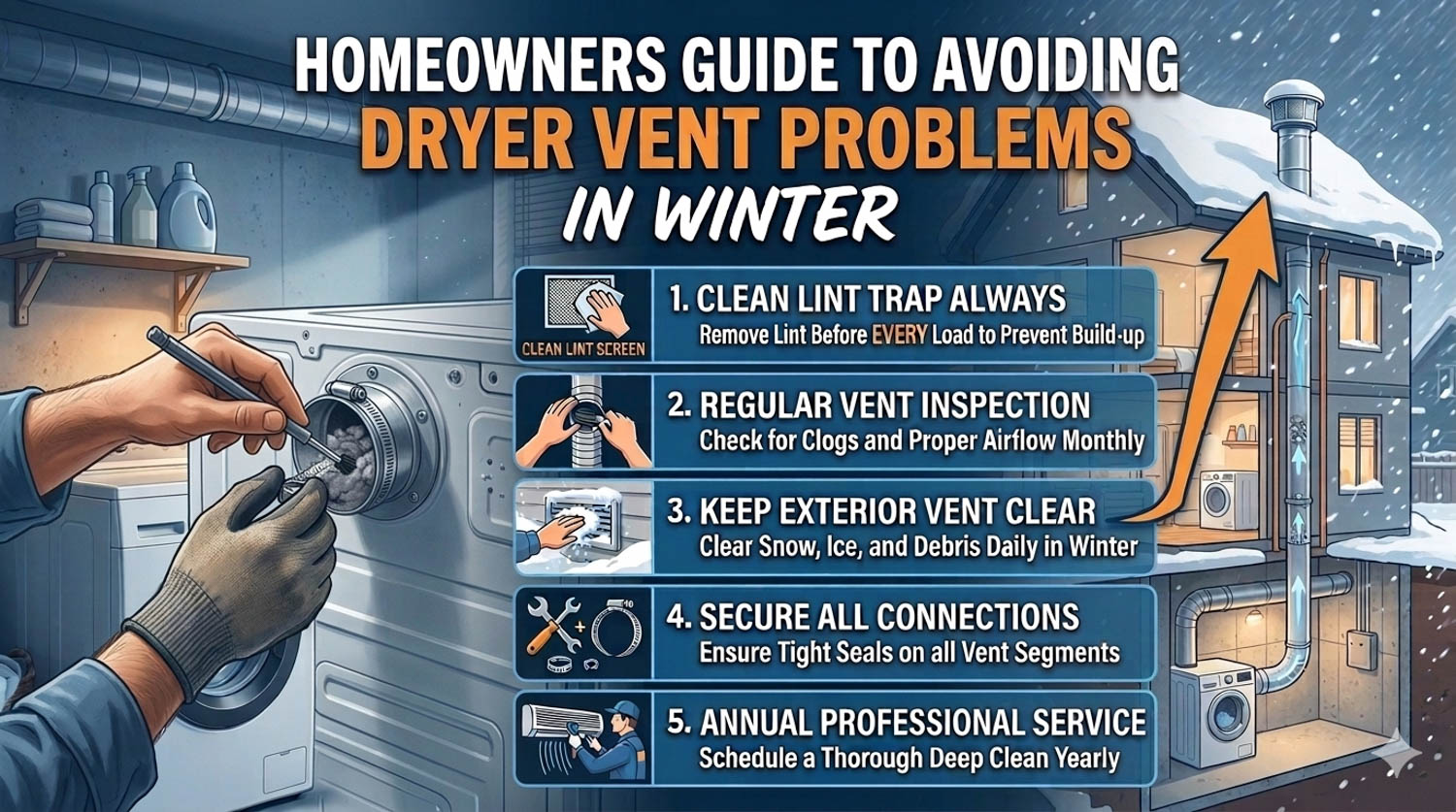
When the cold months arrive, many homeowners notice dryer vent problems in winter, which can lead to longer drying times, safety hazards, and strain on the appliance. Frigid temperatures, snow, and ice create challenges that affect airflow and moisture management, making it essential to understand how seasonal changes impact your laundry system. No matter where you live, your home’s location and exposure to the elements can influence how your laundry setup performs in colder months.
During the colder season, the combination of moisture from laundry and icy outdoor conditions can cause blockages, condensation, and even freezing in the ductwork. Ignoring these signs can lead to expensive repairs, higher energy costs, and safety hazards, including potential fire risks. Understanding the causes and preventive measures for these issues can help keep laundry running smoothly even during harsh weather conditions.
Common Cold Weather Dryer Vent Issues
Cold temperatures can create multiple problems for your system, and local climate conditions can influence the severity:
- Condensation inside ducts: Moist air from laundry mixes with cold temperatures, leading to dryer vent condensation problems. Homeowners in areas with fluctuating temperatures or wet snow, such as Toronto or Mississauga, may notice moisture collecting in ducts, sometimes causing mold or musty smells.
- Restricted airflow: Ice, snow, or debris can block vent openings, resulting in dryer airflow problems in winter. In regions with frequent subzero nights, like Winnipeg, frozen obstructions are a common concern, while areas with heavy snowfall may see snow or slush blocking exterior vents.
- Frozen pipes: Exposed ductwork may develop a frozen dryer vent pipe, preventing proper airflow. For example, Calgary often experiences prolonged sub-zero temperatures that cause ice buildup in exhaust outlets, forcing machines to overwork and potentially shortening appliance lifespan.
- Ice buildup: Moisture can freeze in ducts, creating ice buildup in dryer vent channels. Even small amounts of ice can significantly slow drying times in homes exposed to extended cold periods.
- Blocked exterior flaps: Snow and frost can obstruct the vent exit, causing a blocked exterior dryer vent cover in winter. Areas prone to heavy snowfall often experience this problem.
Being aware of these issues helps homeowners address problems early, reducing the risk of costly repairs or fire hazards.
How Winter Temperatures Affect Dryer Vent Performance
Cold conditions can significantly impact the performance of your drying system. Key impacts include:
- Moisture accumulation: Condensation inside ducts leads to dryer vent moisture buildup, which can create mold or mildew problems and even damage walls or ceilings near vent runs. This is especially common in homes with ducts passing through cold, unheated areas.
- Restricted airflow: Ice or snow partially blocking exhaust points forces the dryer to work harder, increasing the risk of dryer overheating in cold weather. Homes in regions with frequent snow or frost often experience slower drying times as a result.
- Temperature-related contraction: Metal ducts contract slightly in colder temperatures, potentially causing small gaps or misalignment. This can occur in older homes or areas with extreme temperature swings.
- Increased appliance strain: Limited airflow puts extra stress on motors and components. Extended cold periods can make this effect more pronounced.
- Slower drying times: Reduced airflow or frozen sections of ductwork can make laundry take longer to dry. Even partial obstructions can significantly extend drying cycles in colder climates.
Monitoring and maintaining your system during the colder months is essential to avoid these common issues.
Signs Your Dryer May Be Struggling
It’s important to recognize early warning signs so small issues don’t become bigger problems:
- Clothes taking longer than usual to dry
- Excessive heat around the appliance
- Strange noises coming from the vent system
- Frost or ice visible at the exhaust
- Moisture collecting near the machine or ducts
Many homeowners ask, “Why is my dryer not drying clothes in cold weather?” Often, the problem isn’t the dryer itself but rather airflow obstructions or frozen sections in the duct.
Can a Dryer Vent Freeze in Winter?
Yes. Pipes exposed to freezing air can accumulate ice, especially in unheated spaces like attics, basements, or exterior walls. Signs include:
- Frost forming at the vent outlet (common in colder regions)
- Reduced airflow (may occur in homes exposed to prolonged cold periods)
- Whistling or rattling noises from the system
- Increased humidity around the laundry area
A frozen pipe not only slows drying but may also trigger dryer overheating in cold weather, which can damage the appliance and increase fire risk. Even partial freezing can reduce airflow enough to make laundry more time-consuming.
Preventing Snow and Ice Blockages
Taking simple preventive steps can make a big difference:
- Keep exterior vent flaps free of snow and debris – in areas with heavy snowfall, like some northern regions, this may mean checking daily during storms.
- Inspect for frost or ice regularly – in colder areas, such as homes with extended subzero periods, weekly inspections may be necessary.
- Insulate exposed ductwork where possible – this is particularly helpful for ducts running through unheated attics, crawl spaces, or garages.
- Ensure ducts slope slightly for proper drainage – a small slope helps prevent water from freezing inside the vent.
- Check connections for gaps or misalignment – even minor gaps in older homes can allow warm air to escape, reducing airflow.
Even small habits, like clearing snow from vents after a storm or monitoring frost accumulation, can prevent more serious problems and maintain proper airflow.
Conclusion
Cold weather introduces unique challenges to any home’s laundry setup, from ice buildup and moisture accumulation to airflow restrictions and frozen ducts. Homeowners should remain vigilant to catch warning signs early, regardless of climate or region. Taking preventive measures helps maintain safe operation, reduce drying times, and extend appliance life, especially when dealing with dryer vent problems in winter. Regular monitoring, proper maintenance, and understanding how cold conditions affect your system are key to keeping laundry safe, efficient, and hassle-free throughout the season.
Don’t Wait Until It’s Too Late – Protect Your Home and Dryer Today!
Cold weather can take a serious toll on your dryer’s performance and safety. Avoid costly repairs, reduce drying times, and keep your family safe by addressing vent issues early. Book your inspection now and keep your home safe, warm, and worry-free all season long.


